
From Utah to NASA: Summer 2026 Interns
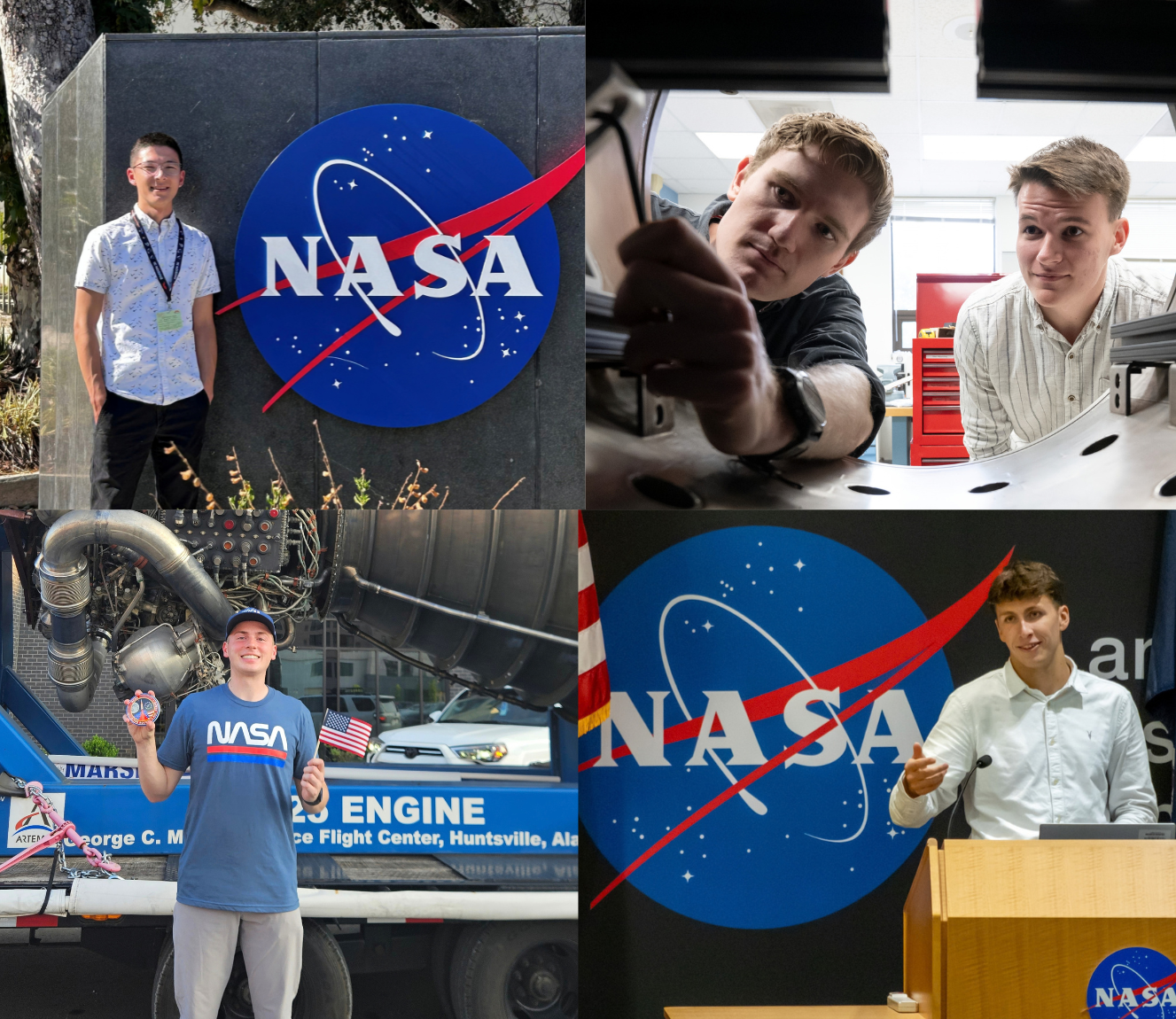
At the heart of the NASA Space Grant program is a mission to inspire and prepare the next generation of the STEM workforce by helping students discover what is possible—and find their place in that future. The Utah NASA Space Grant Consortium (UNSGC) aims to connect Utah students with opportunities they may have never imagined for themselves. NASA internships provide students with the opportunity to gain hands-on experience, work alongside professionals in the field, build valuable connections, and, perhaps most importantly, see themselves as part of the future space and aerospace workforce.
During the summer of 2026, UNSGC supported four undergraduate students as NASA interns at three NASA centers across the country:
Joshua DaBell
Utah State University
NASA Jet Propulsion Laboratory
Andrew Koenig
University of Utah
NASA Langley Research Center
Bryce Christensen
Brigham Young University
NASA Marshall Space Flight Center
Jack Leoni
University of Utah
NASA Langley Research Center
For these students, a NASA internship was more than a summer experience. It was an opportunity to apply their education in a professional setting, learn from NASA scientists and engineers, and gain firsthand insight into the careers and possibilities available within the space industry.
By helping students access authentic experiences with NASA, UNSGC is helping Utah students turn their interest in STEM into meaningful pathways toward the future—and showing them that a career in space is within their reach.
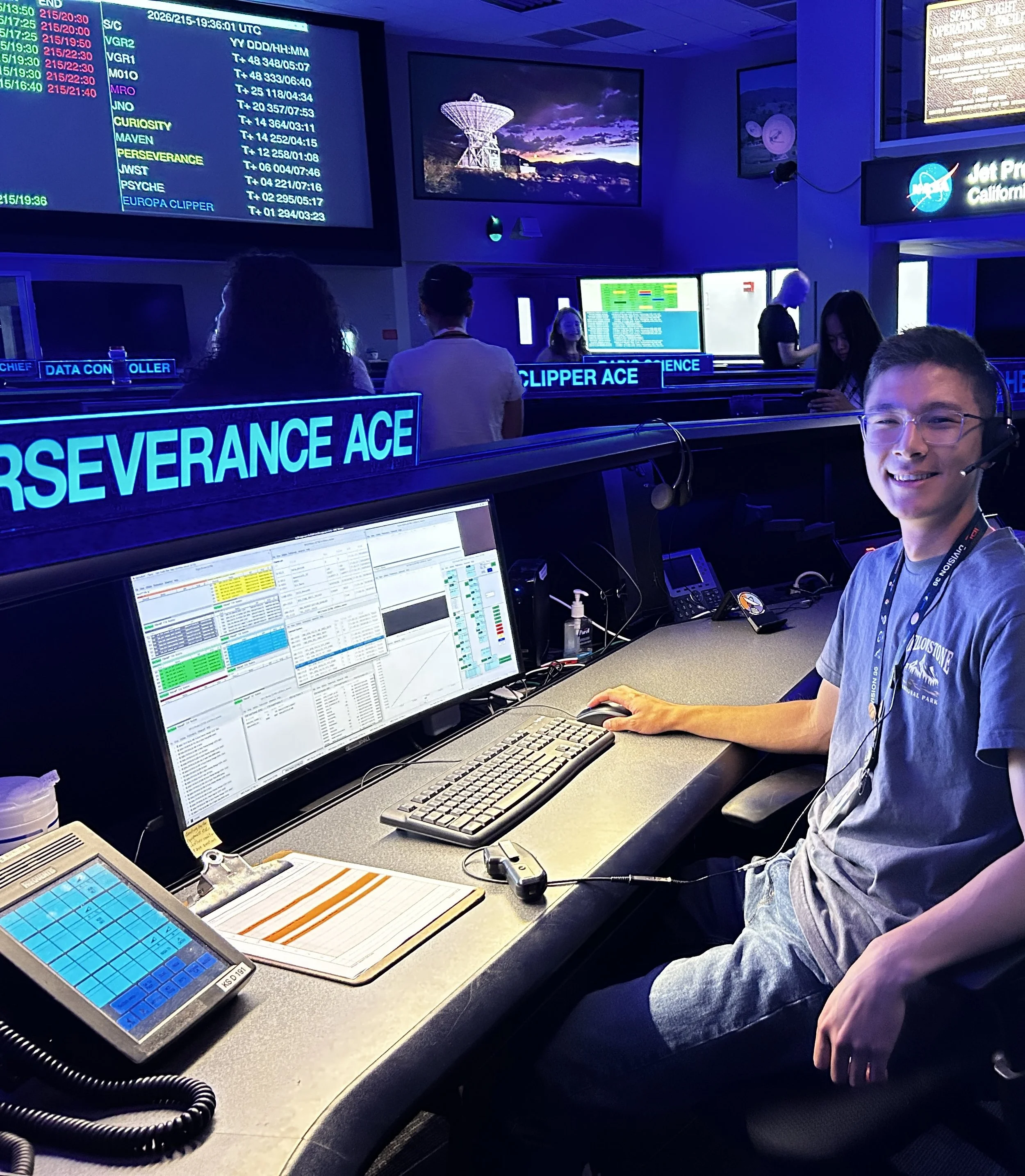
Joshua DaBell, Mechanical Engineering student
at Utah State University, summer internship at
the NASA Jet Propulsion Laboratory
During his 10-week internship, DaBell worked with his mentor, Lin Yi, a technical supervisor of JPL's Advanced RF and Optical Technologies Group, to formulate his own independent research project. Building on Yi's previous research, DaBell focused on researching data collection methods for a large set of small, low-cost satellites, known as a CubeSat swarm, using modulating retro reflectors. These reflectors are attached to the CubeSats, receiving and reflecting a laser beam while encoding data for transmission back to the laser base station. His goal was to investigate if a narrow, steerable laser would be more efficient than a wide-angle laser. His research found that a steerable laser, for a typical CubeSat swarm in low-earth orbit, achieves about a 30% higher data rate at a power level around 166,000-times lower than what's required for a wide-angle laser.
Concluding his internship, DaBell compiled his work into a publication he will present at the IEEE Aerospace Conference in March 2027.
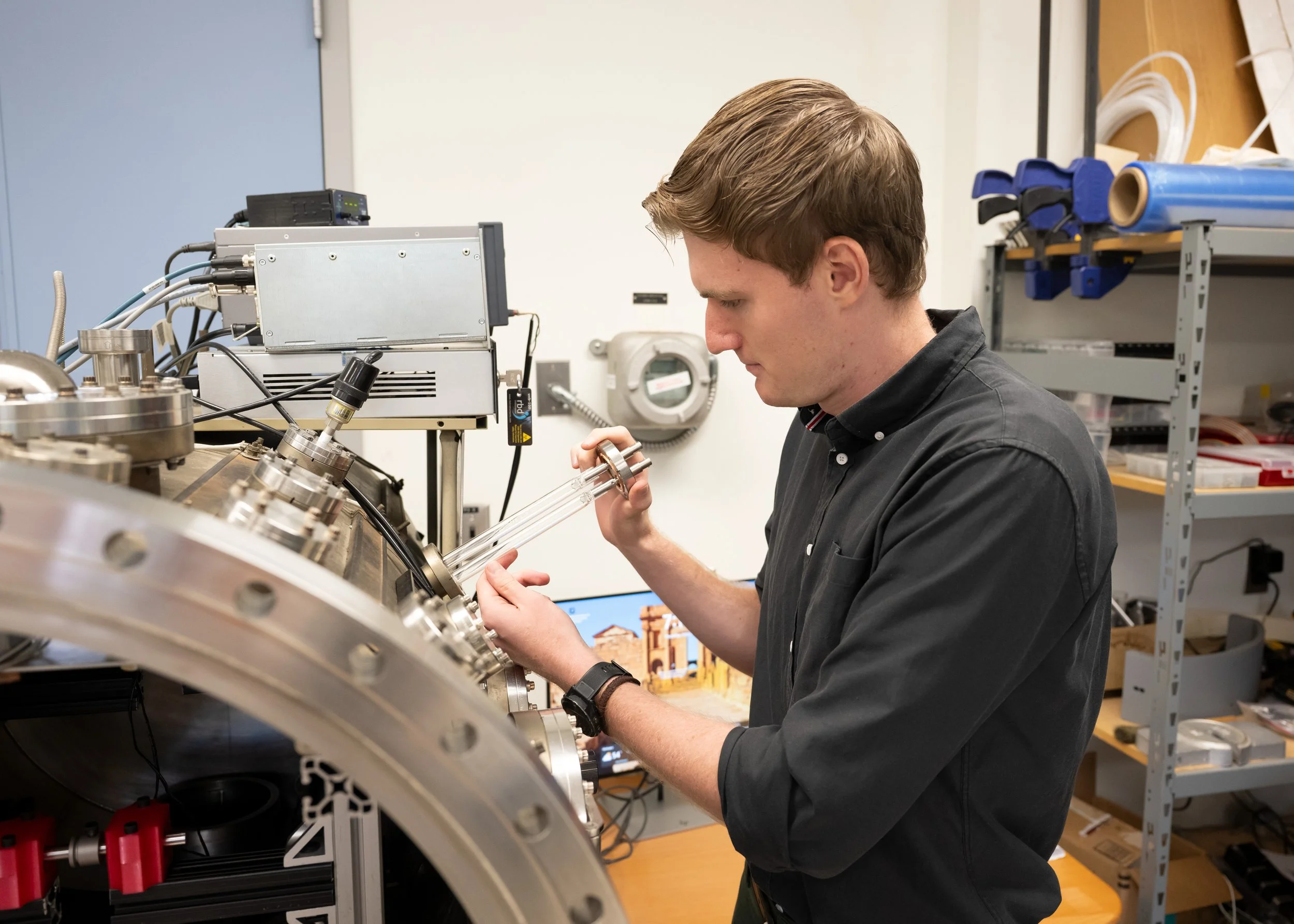
Andrew Koenig, Mechanical Engineering student at the University of Utah, summer internship at NASA Langley Research Center
Andrew Koenig spent the summer of 2026 as a NASA intern at Langley Research Center, working with the Advanced Materials and Processing branch on research related to lunar dust and materials for future exploration. As part of the Dust Mitigation and Environmental Material Solutions group, Andrew conducted abrasion testing on aluminum samples with different ceramic coatings to study how the materials withstand simulated lunar conditions. His work included measuring coating wear and thickness, analyzing surface roughness, and evaluating surface properties using specialized testing techniques.
The research will help inform the design and durability of materials for future lunar habitats, rovers, and rockets. For Andrew, the internship provided more than hands-on research experience—it helped confirm his interest in pursuing a career focused on space exploration. He gained experience with microscopy, programming, CAD software, and professional communication while working on research with a clear connection to NASA’s future lunar exploration goals.
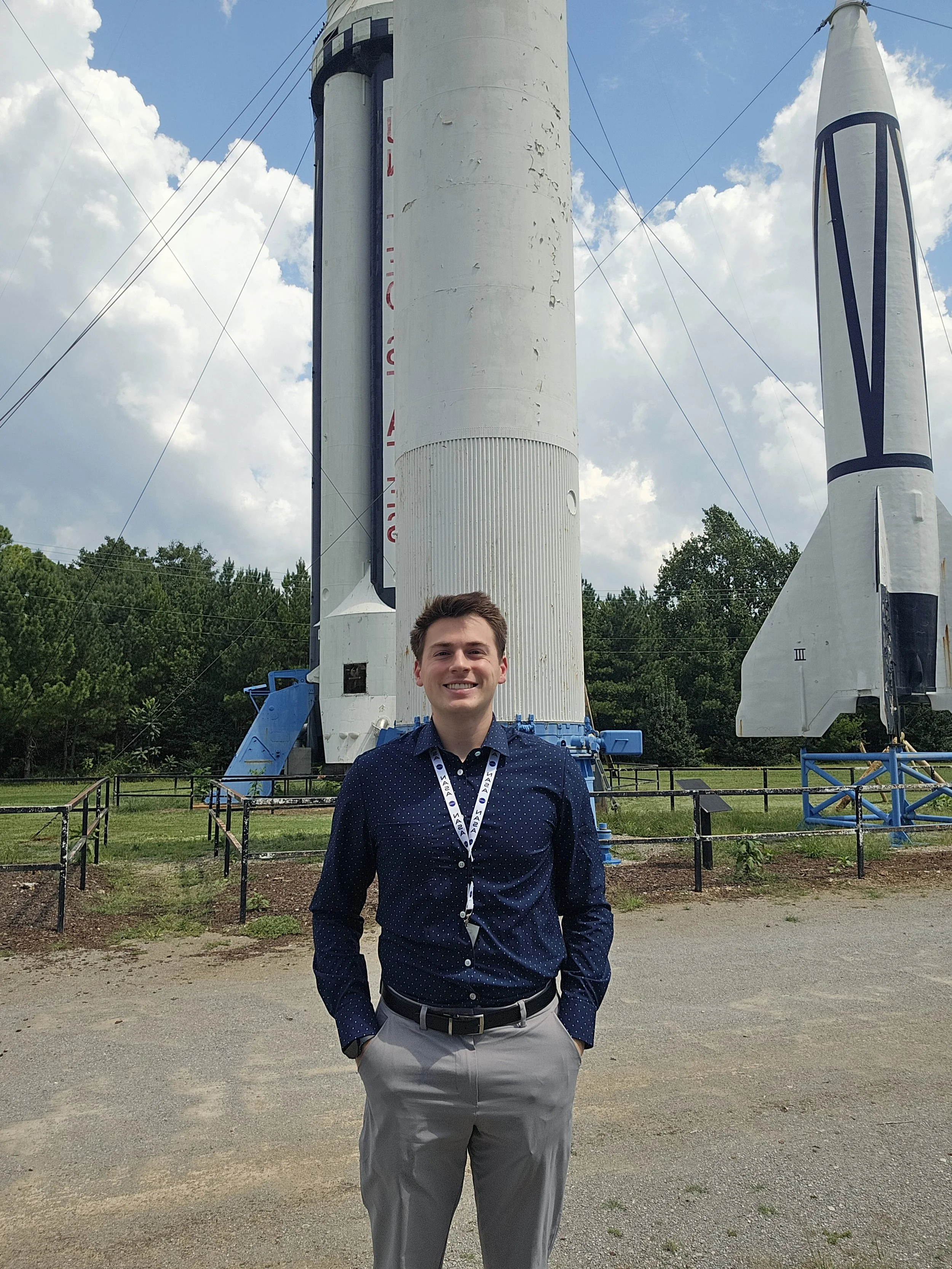
Bryce Christensen, Mechanical Engineering student at Brigham Young University, summer internship at NASA Marshall Space Flight Center
This summer, Bryce Christensen was an intern at NASA’s Marshall Space Flight Center in Huntsville, Alabama, contributing to the Human Landing System team and NASA’s efforts to return America to the Moon. As part of the Guidance, Navigation, and Control (GNC) team, the student developed a terrain-relative navigation simulation using Unreal Engine. The project replicated the view a lunar lander’s onboard cameras would capture during landing and integrated that simulated camera into NASA’s testing and analysis tools.
The internship also provided an opportunity to support NASA’s work with SpaceX during the Starship test flight campaign, developing tools to improve post-flight analysis and visualization of launch data. Beyond the technical experience, the internship gave the student valuable insight into professional aerospace engineering, helped identify areas of interest for graduate study, and opened doors to future opportunities with leading aerospace companies.
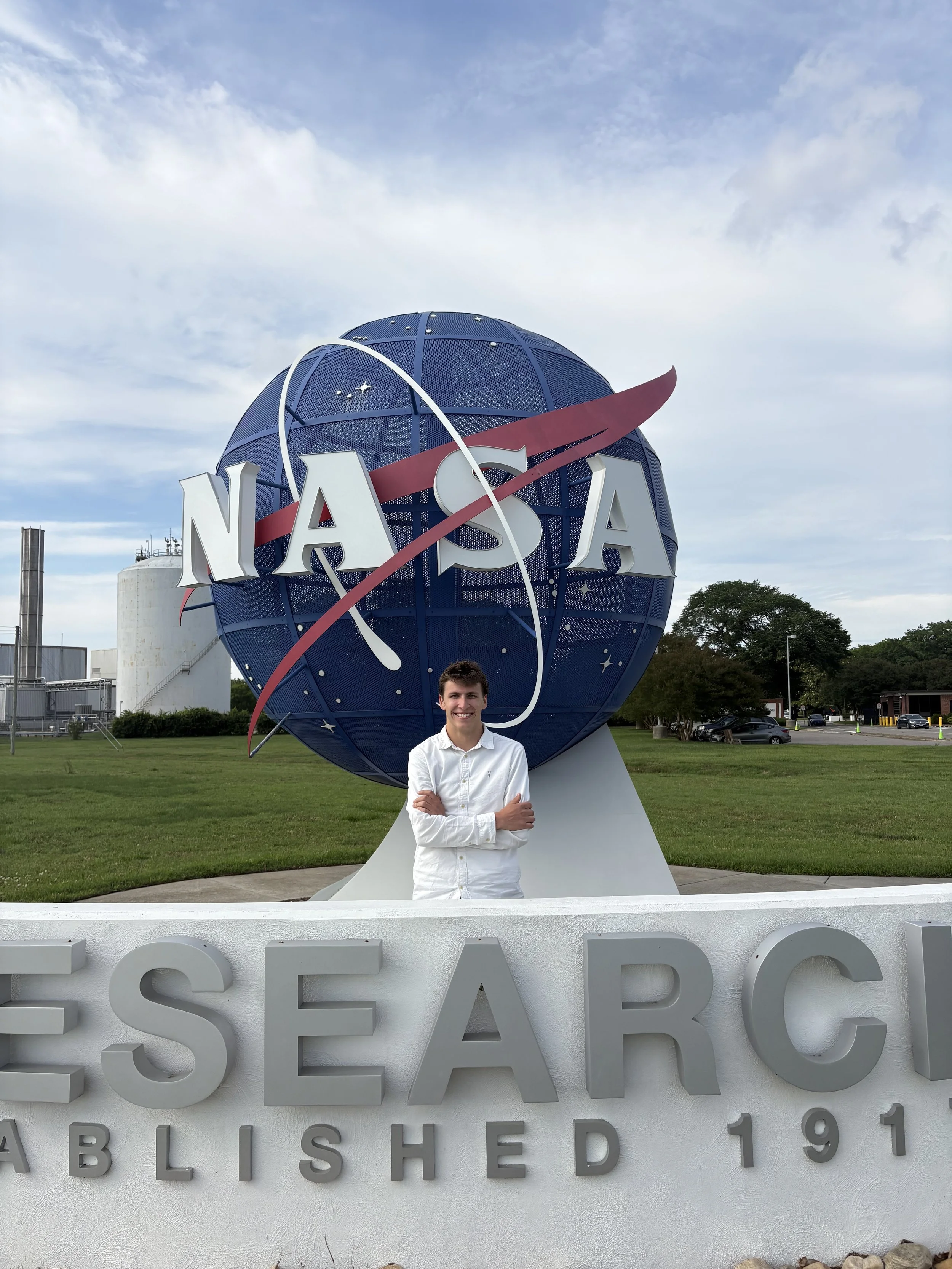
Jack Leoni, Mechanical Engineering student at the University of Utah, summer internship at NASA Langley Research Center
This summer, Jack Leoni was an materials research engineer intern at NASA’s Langley Research Center, supporting the HiCAM project within the Durability, Damage Tolerance, and Reliability Branch. Jack generated validation data to study how delamination migrates through polymer matrix composites under mixed-mode loading, working alongside NASA researchers and modelers to better understand the behavior of these advanced aerospace materials.
The internship provided extensive hands-on experience with aerospace materials testing, including Single Leg Bend testing, X-ray CT imaging, ultrasonic scanning, optical microscopy, Digital Image Correlation, and fracture toughness analysis. The experience directly complemented the student’s graduate research, providing valuable skills and knowledge that can be applied to a master’s thesis and future career. Through this hands-on NASA experience, the student gained a deeper understanding of composite materials while connecting academic research to real-world aerospace challenges.
